Condo and Townhome Water Damage in Marietta
Water damage in a condo, townhome or apartment involves more than one household and often an association, so the first job is getting the water stopped and the second is getting the right people told, in writing. The drying itself is the same as in a house: extraction, tear-out of what won't dry, measured drying. What's different is who owns which wall, who decides, and whose insurance applies. For condo and townhome water damage in Marietta and East Cobb, call (470) 264-5901 to reach an independent restoration company that works here.
Dry it: stop the source, even if it's in another unit, by reaching that owner, the manager or the HOA. Fix it: repairs wait until it's clear who's responsible for which parts.
When Water Comes From the Unit Above
- Tell the upstairs occupant right away, in person if you can, so they can shut off the water.
- Tell the HOA or property manager, especially if you can't reach the neighbor or the source may be in a common pipe.
- Protect your unit: move belongings, put down buckets, stay out from under a sagging ceiling.
- Photograph everything, with the time.
- Follow up in writing to the neighbor and the association.
- Call to get drying started in your unit.
Who Usually Owns What
| Part of the building | Often belongs to | Check |
|---|---|---|
| Inside your unit: drywall, flooring, cabinets, fixtures | The unit owner | Your declaration |
| Pipes serving one unit | The unit owner | Your declaration |
| Pipes serving several units, the roof, exterior walls | The association | Your declaration |
| Your belongings | You, through your own policy | Your policy |
Georgia condominiums are governed by their declarations and by state condominium law. Every community is different; read yours and ask the HOA early.
If You Rent
Tell your landlord or property manager first, in writing, with photos and the time. They usually arrange the work, since it affects the building. While you wait:
- move your belongings away from the water
- stay out from under a sagging ceiling
- keep a list of anything that was damaged, with photos
- let your renter's insurer know, if you carry a policy
You don't usually hire the restoration company yourself, but you can share this number with the landlord.
Drying Shared Ceilings and Walls
Drying across units takes coordination:
- Access: the company may need to get into the unit above or next door to find the source and dry from both sides.
- Ceilings: a stained section is often opened so the space between floors can dry, as in any house. See ceiling leak repair.
- Party walls: the shared wall between townhomes may need drying from one side or both.
- Noise: equipment runs continuously; neighbors may hear it.
- Records: each owner and the association will want copies of the readings.
Dry it: every affected unit is measured until it matches dry areas. Fix it: each owner, or the association, handles the repairs to its own parts.
Townhomes in Cobb
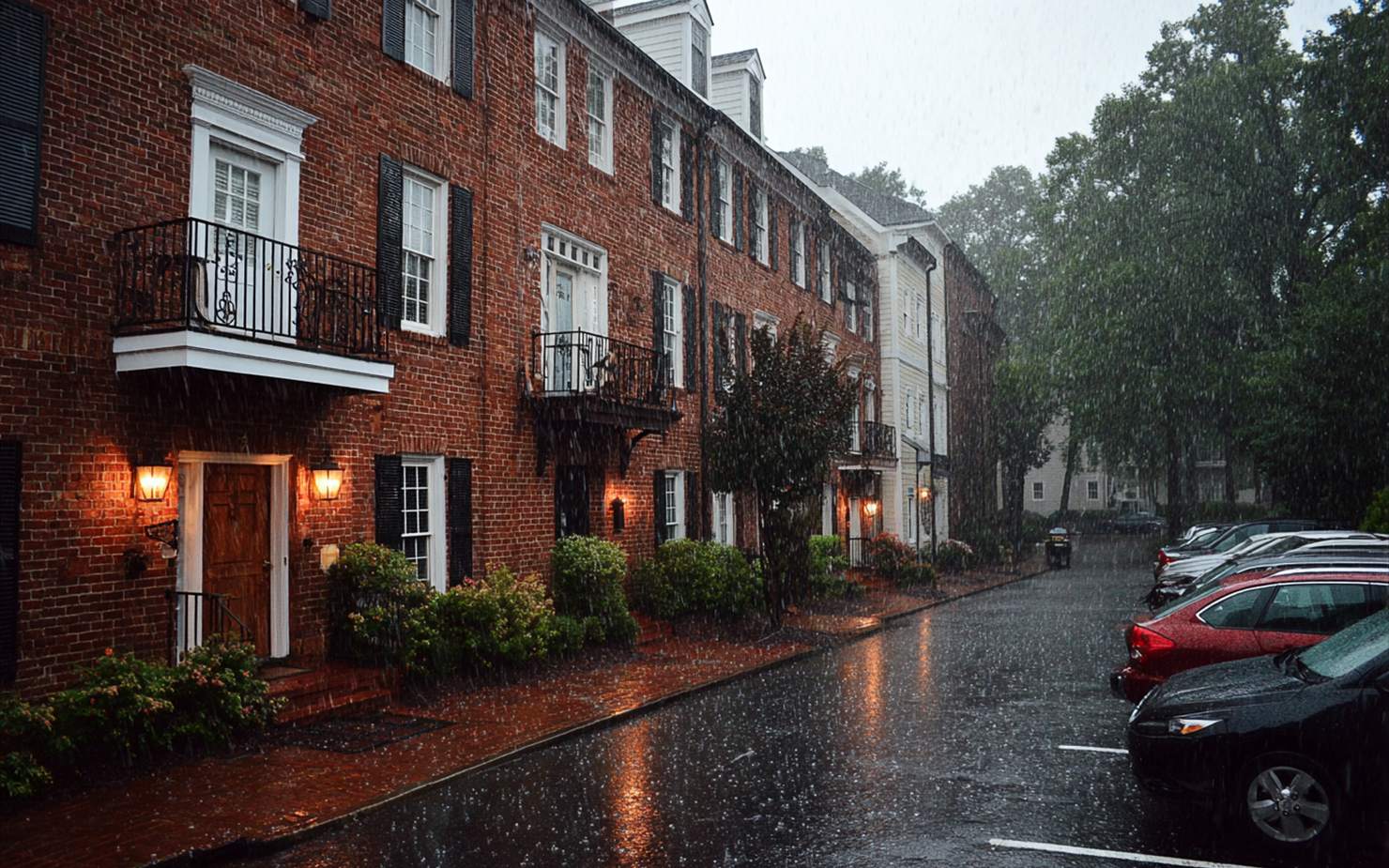
Townhome communities across Marietta, Smyrna and Kennesaw often stack a bath over a kitchen and share walls on both sides. A water heater in a garage or a closet, or a washer upstairs, can reach the neighbor's unit through the shared wall. Townhome owners usually own more of the building than condo owners do, but the HOA may still control the roof and exterior. Check your declaration before the repair starts, especially for anything on the outside.
Records That Help Everyone
- photos of the source, every wet area and the water's path
- the time you noticed it and when it was stopped
- copies of written notices to the neighbor, the HOA or the landlord
- the restoration company's readings and scope
- a list of damaged belongings with photos
Three Policies, One Leak
A leak between units can involve three insurance policies at once: yours, your neighbor's, and the association's master policy. Each usually covers different things. The association's policy often covers the building's structure and common elements; unit owners' policies (often called HO-6 policies for condos) usually cover interior finishes, improvements and belongings; a renter's policy covers the tenant's belongings. Which one pays for a particular wall or ceiling depends on the declaration, the cause, and the policies' own wording.
That's why documentation matters so much here. Each insurer will want photos, the timeline and the restoration company's readings. Report the loss to your own insurer even if you believe someone else is responsible; it's usually a policy requirement.
Dry it: start drying right away, whoever ends up paying. Fix it: let the insurers and the association sort out responsibility for the repair.
Cutting the Odds Next Time
Most leaks between units start at a handful of places: washer hoses, toilet supply lines, water heaters in closets, and shower pans. Braided washer hoses, a leak sensor under the water heater and behind the toilet, and knowing where your unit's shutoff is (it may be in a closet, a utility room or the garage) prevent many of them. If you're away often, turning off the water to your unit before a trip is a simple habit.
Why Condo Repairs Take Longer
Repairs in shared buildings often wait on other people: the association's approval for work on common elements, an adjuster from each insurer, access to the neighbor's unit, and sometimes a building manager's schedule for noisy work. Drying shouldn't wait for any of that, but the rebuild often does. Keeping everyone copied on the readings and the scope helps it move.
Who Pays When Water Comes From Upstairs?
It depends on the cause, your declaration and the insurance policies involved. Tell everyone in writing early and keep records.
Can the Restoration Company Go Into My Neighbor's Unit?
Only with that owner's or the association's permission. The HOA or manager can usually help arrange access.
Condos and Townhomes Around Marietta
Around the Square
- Marietta SquareAround the Square
- Whitlock AvenueAround the Square
- Northwest MariettaAround the Square
- Fair OaksAround the Square
- Kennesaw MountainAround the Square
East Cobb
- East CobbEast Cobb
- Indian HillsEast Cobb
- Sope CreekEast Cobb
- Chattahoochee PlantationEast Cobb
- Sandy PlainsEast Cobb
North and West Cobb
- KennesawNorth and West Cobb
- AcworthNorth and West Cobb
- WoodstockNorth and West Cobb
- Powder SpringsNorth and West Cobb
South Cobb and the River