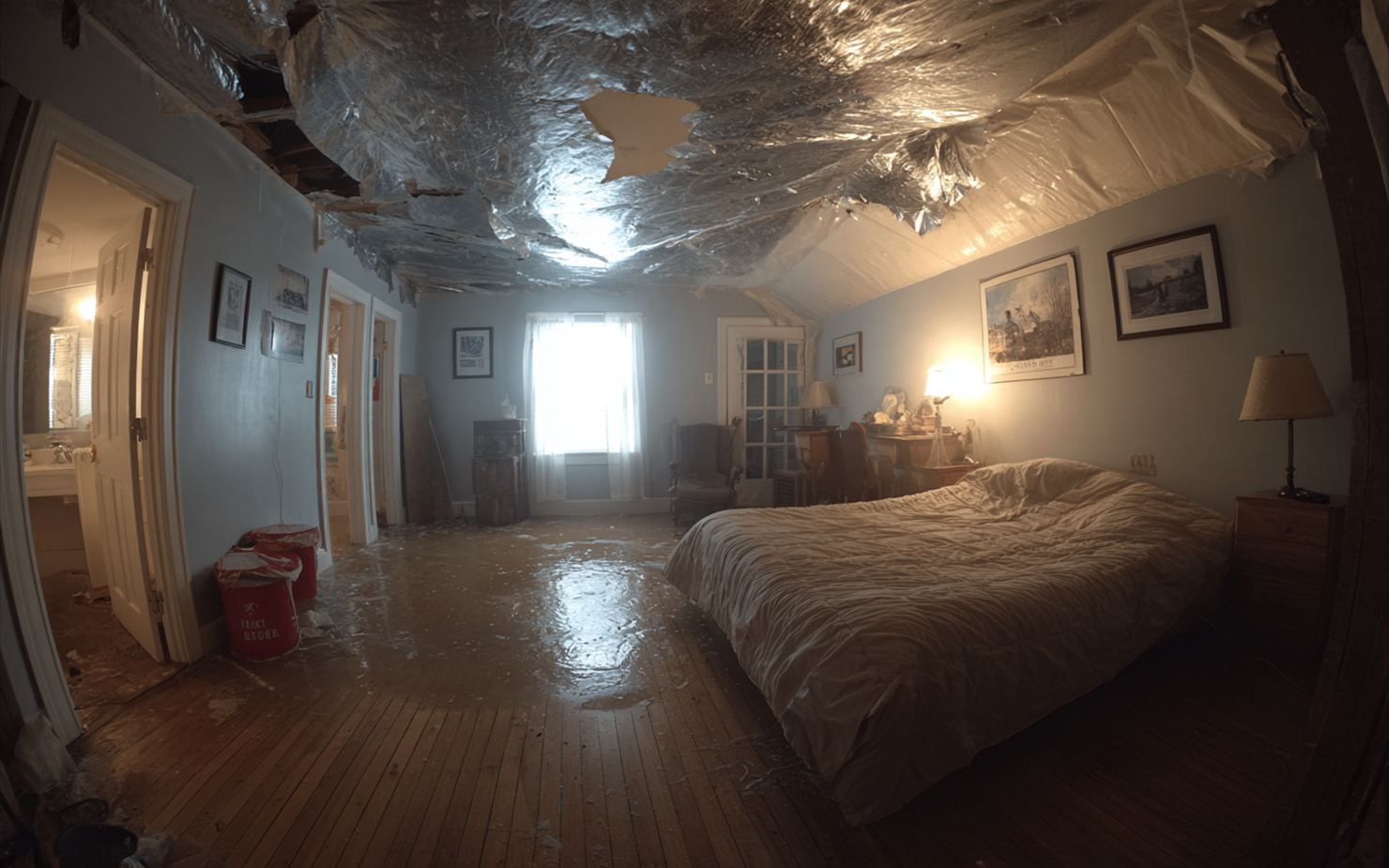
Ceiling Water Damage in Marietta
A water stain on the ceiling is the visible edge of a wet area that's usually larger, and the water has to be found, stopped and dried before the ceiling can be repaired. Painting over a stain while the drywall and the space above it are still wet just brings the stain back. Ceiling leak repair in Marietta usually means three steps: trace the source, dry the cavity between the floors, then cut, patch, texture and paint. For ceiling water damage repair in Marietta and East Cobb, call (470) 264-5901 to reach an independent restoration company that works here.
Dry it: find and stop the source, then dry the space above the ceiling. Fix it: repair and repaint the drywall once it reads dry.
Where Ceiling Water Comes From
| Source | Where the stain usually shows | Clues |
|---|---|---|
| An upstairs bath (toilet seal, tub drain, shower pan) | The kitchen, dining or family room ceiling below | Worse after someone showers or flushes |
| An upstairs laundry | The room under the washer | Appears after a load runs |
| The roof (flashing, valleys, vents) | Top-floor ceilings, often near walls or corners | Shows up during or after heavy rain |
| An attic air handler's condensate line | A ceiling near the furnace closet or the attic access | Summer, when the AC runs hardest |
| Supply lines in the ceiling | Anywhere along the run | Constant, not tied to use or weather |
| Condensation on ducts | Small spots along a duct line | Humid summer days |
More on the most common case: when the upstairs bath comes through.
Reading the Stain
- A tan or brown ring is dried water that carried minerals and dirt to the edge. The center may already be dry; the drywall above may not be.
- A stain that grows after rain points to the roof or flashing.
- A stain that grows after a shower points to the bath above.
- Bubbling or peeling paint means water is sitting behind the paint now.
- A soft or bulging spot means the drywall is holding water, and that's a safety issue.
When the Ceiling Sags
A sagging ceiling can come down without warning, especially with water pooled behind it.
- Get everyone out of the room, including pets.
- Turn off the circuit for any light or fan in that ceiling, if the panel is dry and reachable.
- Move furniture and electronics out from underneath, and put a bucket and towels down from the side.
- Don't push on it or poke it to drain it. Let the restoration company open it in a controlled way.
- Call.
Drying the Space Between Floors
The hard part of a ceiling leak is the cavity above it: the joists, the subfloor of the room upstairs, and any insulation. Restoration companies usually:
- open the stained or sagging section of drywall so air can move into the cavity
- remove wet insulation, which holds water against the wood
- set air movers and a dehumidifier aimed at the opening
- measure the joists and subfloor until they match dry areas
On the floor above, they may lift a section of flooring or remove a toilet to dry from the top as well. In humid weather this takes longer, so the drying log matters.
Dry it: the cavity is dry when the wood readings match a dry part of the house. Fix it: only then does new drywall go up.
Repairing the Ceiling
- Cut back to sound drywall, usually to the nearest joists so the patch has something to attach to.
- Hang new drywall, tape and mud the seams.
- Match the texture. Smooth, orange-peel, knockdown and popcorn ceilings all need different techniques; popcorn in older homes may need testing before it's disturbed.
- Prime with a stain-blocking primer so the old stain doesn't bleed through.
- Paint the whole ceiling plane, not just the patch, so the sheen matches.
The source gets fixed too: the bath, the roof or the line. That repair is separate from the restoration and done by whoever you choose.
The Room Upstairs
A ceiling stain below usually means something is wrong in the room above. After the source is repaired, the floor in that room needs checking: tile may have loose grout, vinyl may be lifting, and the subfloor under a toilet may be soft. If the upstairs floor got wet, it's dried and repaired in the same project, so the ceiling below doesn't get damaged again. More on floors: floors, walls and drywall repair.
Textured and Popcorn Ceilings
Many Marietta homes from the 1960s through the 1980s have textured or popcorn ceilings. Matching that texture in a repair takes skill. Some older popcorn ceilings contained asbestos, so a ceiling from that era is often tested before it's disturbed. If it needs special handling, that's arranged before any cutting begins. Many owners use a water damage repair as the moment to have the whole ceiling smoothed.
Light Fixtures, Fans and Vents in a Wet Ceiling
Water follows wires and ducts, so ceiling lights, fans and air vents are common places for a drip to appear. Turn off the circuit for any wet fixture and leave it off until someone qualified has checked it. Recessed lights and bathroom exhaust fans often need to come out so the ceiling can be dried and repaired around them; they go back in once the drywall is finished.
Can I Just Paint Over a Water Stain?
Only once the drywall and the space above it are dry, and only with a stain-blocking primer first. If the drywall sagged, softened or stayed wet, that section should be replaced.
Why Does the Stain Keep Coming Back?
Either the source wasn't fully fixed, or the cavity above wasn't dried before painting. A moisture reading answers which one.
Ceiling Leaks Around Marietta
Around the Square
- Marietta SquareAround the Square
- Whitlock AvenueAround the Square
- Northwest MariettaAround the Square
- Fair OaksAround the Square
- Kennesaw MountainAround the Square
East Cobb
- East CobbEast Cobb
- Indian HillsEast Cobb
- Sope CreekEast Cobb
- Chattahoochee PlantationEast Cobb
- Sandy PlainsEast Cobb
North and West Cobb
- KennesawNorth and West Cobb
- AcworthNorth and West Cobb
- WoodstockNorth and West Cobb
- Powder SpringsNorth and West Cobb
South Cobb and the River