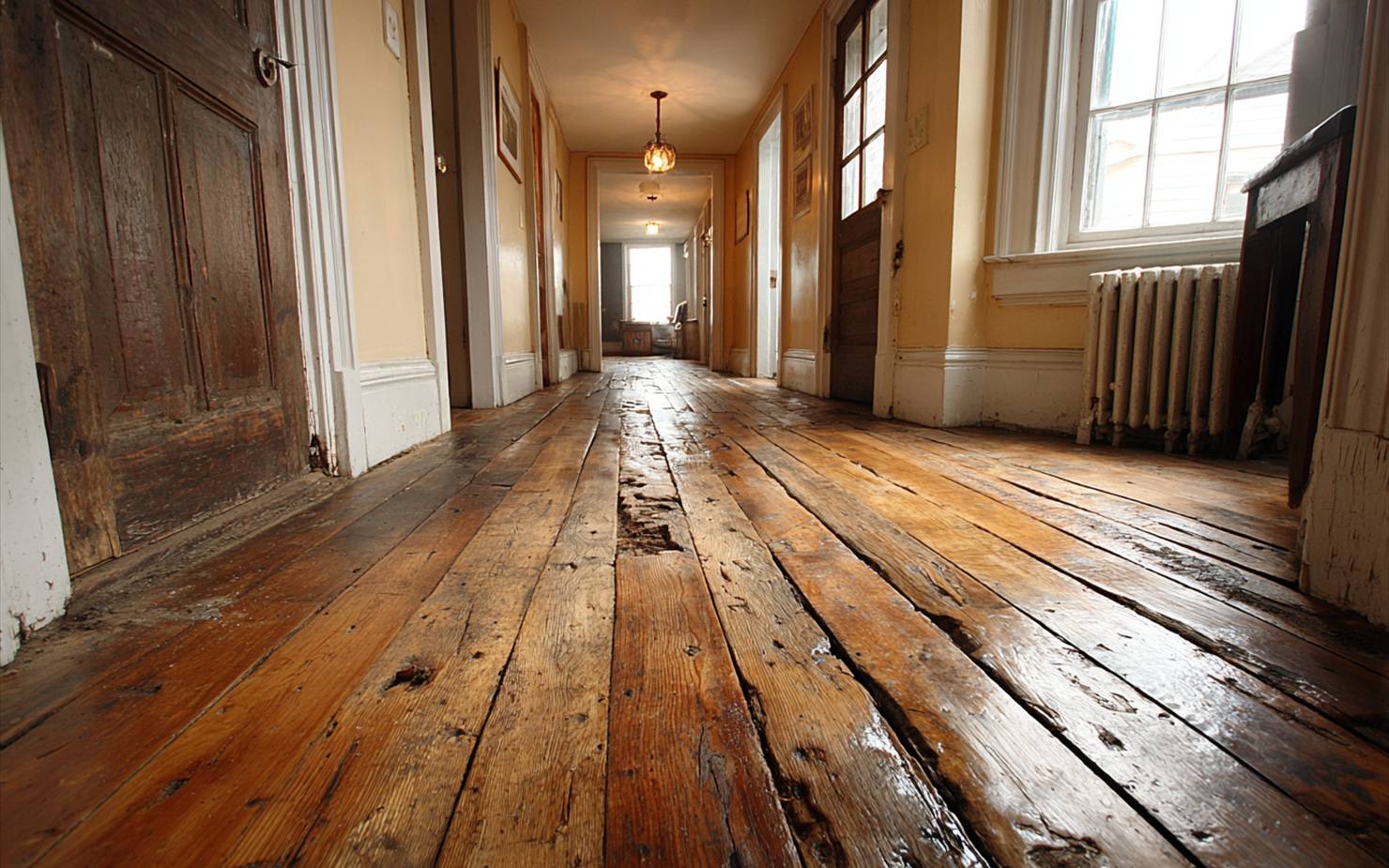
Water Damage Repair in Marietta
Water damage repair is the second half of the job: rebuilding the floors, walls, drywall, trim and cabinets that had to come out or were ruined, after the house has been dried to measured numbers. It's the half people notice and live with, so it's worth doing carefully, matching what was there and not closing anything up while it's still wet. When you search for water damage repair near you in Marietta or East Cobb, (470) 264-5901 reaches an independent restoration company that handles both the drying and the repair, or works with a contractor who does.
Dry it: repairs start only when the readings say the subfloor, studs and cavities are dry. Fix it: this page covers what comes next.
What Water Does to Floors
| Floor | What water does | Usually |
|---|---|---|
| Solid hardwood | Cups (edges up) as it absorbs water from below; crowns if sanded too early | Dried slowly; often flattens and can be sanded and refinished |
| Engineered wood | Thin wear layer can delaminate | Damaged boards replaced; more is lost than with solid wood |
| Laminate | Swells at the seams and edges; doesn't recover | Wet sections replaced; often a whole room |
| Luxury vinyl plank | Holds up, but traps water underneath on the subfloor | Lifted so the subfloor can dry, then relaid if undamaged |
| Carpet and pad | Pad soaks and holds water | Pad replaced; clean-water carpet sometimes relaid |
| Tile | Survives; grout and the subfloor below may not | Checked for loose tiles and soft subfloor |
Drywall and Wall Cavities
Drywall wicks water upward like a sponge, often a foot or more above the waterline. Behind it, the bottom plate of the wall and any insulation stay wet longer than the surface suggests. The usual approach:
- Cut the bottom of the wall to a straight line above the wet area, often 2 feet up, so the cavity can dry and the patch is easy.
- Remove wet insulation, which holds water against the studs.
- Dry the studs and bottom plate to the same readings as a dry wall.
- Check behind cabinets and vanities, where water hides longest.
What Can Be Dried and What Gets Replaced
Caught quickly, clean water leaves a lot that can be saved. Solid hardwood that cupped often flattens as it dries. Framing dries. Plaster in older homes often dries in place. What usually gets replaced:
- carpet pad, and carpet that touched outside water
- laminate and particleboard that swelled
- engineered flooring that delaminated
- drywall that sagged, crumbled or stayed wet for days
- cabinet bases made of particleboard
- insulation that soaked through
Dry it: the readings decide what was saved. Fix it: the repair list is built from what wasn't.
Matching What Was There
The hardest part of a repair is making it disappear.
- Hardwood: new boards are woven in and the whole room is sanded and refinished so the color matches. Old heart-pine or oak in houses near the Square may need reclaimed wood.
- Laminate and vinyl plank: discontinued lines are common; sometimes a whole connected area is replaced to keep it uniform.
- Drywall texture: orange-peel, knockdown and smooth finishes are matched by hand.
- Paint: matched from a chip, and the whole wall is painted so the sheen is even.
- Trim and baseboard: older profiles may need to be milled or sourced.
Ask the company to list matching decisions in the written scope, and ask your insurer how it handles matching before you choose how far the repair goes.
The Order of a Repair
- Final readings confirm the structure is dry.
- Scope and selections: what's being replaced, and the materials you choose.
- Ordering: flooring, cabinets and special items can take weeks.
- Insulation and drywall, then tape, texture and primer.
- Flooring, then cabinets and countertops if needed.
- Trim, doors and paint.
- Walkthrough against the written scope.
Some work needs a permit from the City of Marietta or Cobb County, usually anything structural, electrical or plumbing. Drywall, paint and flooring usually don't.
Worth Doing While the Wall Is Open
An open wall is a chance to fix the weak spot. Owners often replace old supply lines, add shutoff valves, swap washer hoses for braided ones, put a pan under the upstairs washer, or add a leak sensor. Those upgrades usually aren't part of an insurance repair, so ask for them to be listed separately.
Cabinets, Vanities and Built-Ins
Kitchen and bath cabinets are often the most expensive part of a water damage repair. Many have bases made of particleboard, which swells when wet and doesn't shrink back. If water sat under a cabinet run, the bases may need replacing even if the doors and boxes above look fine. That often means lifting countertops, which can be hard to remove without damage, especially stone. A restoration company will usually pull toe-kicks first to dry the floor underneath and judge whether the bases can stay.
Dry it: toe-kicks off, air underneath, readings on the base. Fix it: new bases, or a matched run, if the particleboard swelled.
Stairs and Landings
Water from an upstairs bath or laundry often runs to the stairs, soaking carpeted treads, the stringers underneath and the drywall along the stairwell. Carpet on stairs is usually replaced if the pad soaked; wood treads can often be dried and refinished. The wall beside a stairwell is tall and awkward to repair, so it's usually patched in sections and the whole wall repainted for an even finish.
Will My Cupped Hardwood Flatten?
Often, if it's dried slowly and the water was clean. Sanding before it's fully dry causes crowning, which is worse.
Does Insurance Cover Matching the Rest of the Floor?
Policies differ. Some cover a consistent appearance across a room; others pay only for the damaged area. Ask early.
Repairs Around Marietta
Around the Square
- Marietta SquareAround the Square
- Whitlock AvenueAround the Square
- Northwest MariettaAround the Square
- Fair OaksAround the Square
- Kennesaw MountainAround the Square
East Cobb
- East CobbEast Cobb
- Indian HillsEast Cobb
- Sope CreekEast Cobb
- Chattahoochee PlantationEast Cobb
- Sandy PlainsEast Cobb
North and West Cobb
- KennesawNorth and West Cobb
- AcworthNorth and West Cobb
- WoodstockNorth and West Cobb
- Powder SpringsNorth and West Cobb
South Cobb and the River