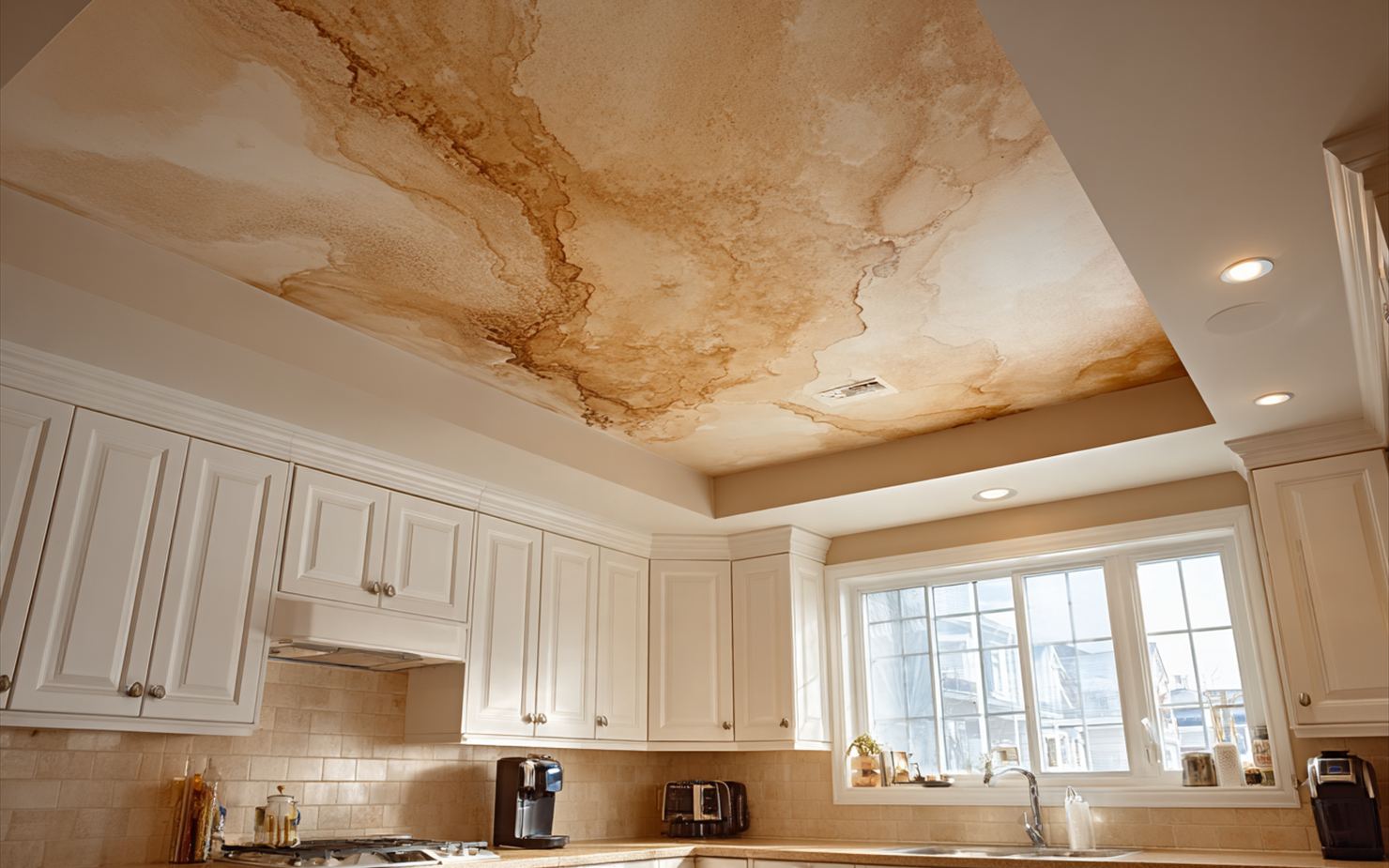
In a two-story Marietta house, the most common ceiling stain sits directly under a bathroom. East Cobb subdivisions from the 1970s through the 2000s were built with the bedrooms and baths upstairs, often stacked over the kitchen, breakfast room or family room. When something in that bathroom leaks, gravity does the rest. The first sign is rarely a puddle upstairs; it's a ring on the ceiling below.
The Usual Suspects
| Fixture | How it leaks | What you notice |
|---|---|---|
| Toilet | The wax seal under the base fails; water seeps out with every flush | A stain under the toilet's location that grows slowly; a rocking toilet |
| Toilet supply line | The braided or plastic line to the tank splits or the nut loosens | A sudden, steady drip or flow |
| Tub drain | The drain gasket or overflow seal fails | A stain after baths, not showers |
| Shower pan | The membrane under a tiled shower cracks or the drain seal fails | A stain after showers; loose or dark grout |
| Grout and caulk | Gaps let water past the tile into the wall and floor | Slow spreading stain, often near a wall |
| Vanity supply lines | A shutoff valve or line weeps | Water inside the vanity cabinet; a stain below |
The pattern tells you a lot. A stain that grows after showers points to the shower; one that grows after flushing points to the toilet seal; a constant drip points to a supply line.
Why It Shows Up Somewhere Else
Water that leaks through a bathroom floor doesn't always drop straight down. It runs along the top of the joists, follows pipes, and soaks into the ceiling drywall wherever it's lowest or weakest. That's why the stain may sit a few feet from the bathroom above, or appear around a light fixture. A restoration company traces it with a moisture meter and often a thermal camera.
The First Steps
- Stop using the fixture you suspect, and close its shutoff valve.
- If the drip is steady, close the main.
- Turn off the circuit for any light fixture in the stained ceiling, if the panel is dry.
- Stay out from under a sagging ceiling and move furniture away.
- Photograph the stain and the bathroom above.
- Call to get the cavity dried before the ceiling is repaired.
Drying Between the Floors
The real damage sits in the space between the bathroom floor and the ceiling below: the subfloor, the joists and any insulation. A restoration company usually opens the stained ceiling so air can reach that space, removes wet insulation, and runs drying equipment aimed into the opening. Upstairs, it may remove the toilet or lift flooring to check the subfloor. In Marietta's humid months, that cavity can take several days to read dry.
Dry it: the subfloor and joists are dried until they match a dry part of the house. Fix it: the bathroom floor, then the ceiling below, in that order.
Fixing Both Rooms
The bathroom source is repaired first: a new wax seal, a new supply line, a regrouted or rebuilt shower. That's separate from the restoration and done by whoever you choose. Then the restoration side puts things back:
- Upstairs: a soft subfloor under the toilet is replaced; tile is reset if needed.
- Downstairs: new drywall, matched texture, stain-blocking primer, and paint across the whole ceiling.
More on the ceiling side: ceiling leak repair.
Slow Leaks Do More Damage
A sudden burst gets noticed in minutes. A slow seep from a toilet seal can run for months before the ceiling shows it, and by then the subfloor may be soft and the framing stained. Warm, damp conditions between floors make slow leaks especially damaging here. See wood rot and soft framing.
Around Cobb
The classic case shows up across East Cobb and around Indian Hills, where two-story houses stack baths over kitchens. In townhomes in Vinings, the bath above may belong to a neighbor.
EPA WaterSense: Fix a Leak Week, toilets and showers
Upgrades While It's Open
With the ceiling open below a bathroom, owners often take the chance to replace old supply lines with braided ones, add or replace shutoff valves under the toilet and sink, and put a leak sensor behind the toilet. A drain pan under an upstairs washer on the same floor is another common addition.
Using the House While It Dries
While the cavity under a bathroom dries, the bathroom above usually can't be used, and the room below may have equipment running and part of its ceiling open. In most houses the family uses another bathroom and keeps the kitchen or family room partly closed off for a few days. Ask the company which rooms will be affected and for how long.
Questions
How can I tell if my toilet seal is leaking?
A toilet that rocks, water around its base, or a ceiling stain directly below are the usual signs. A moisture reading under the toilet confirms it.
Can I keep using the shower while the ceiling dries?
Not until the source is fixed. Using it keeps re-wetting the cavity.
Will insurance cover the ceiling?
Sudden leaks are often covered; long-running seepage often isn't. Policies differ, so call your agent early.
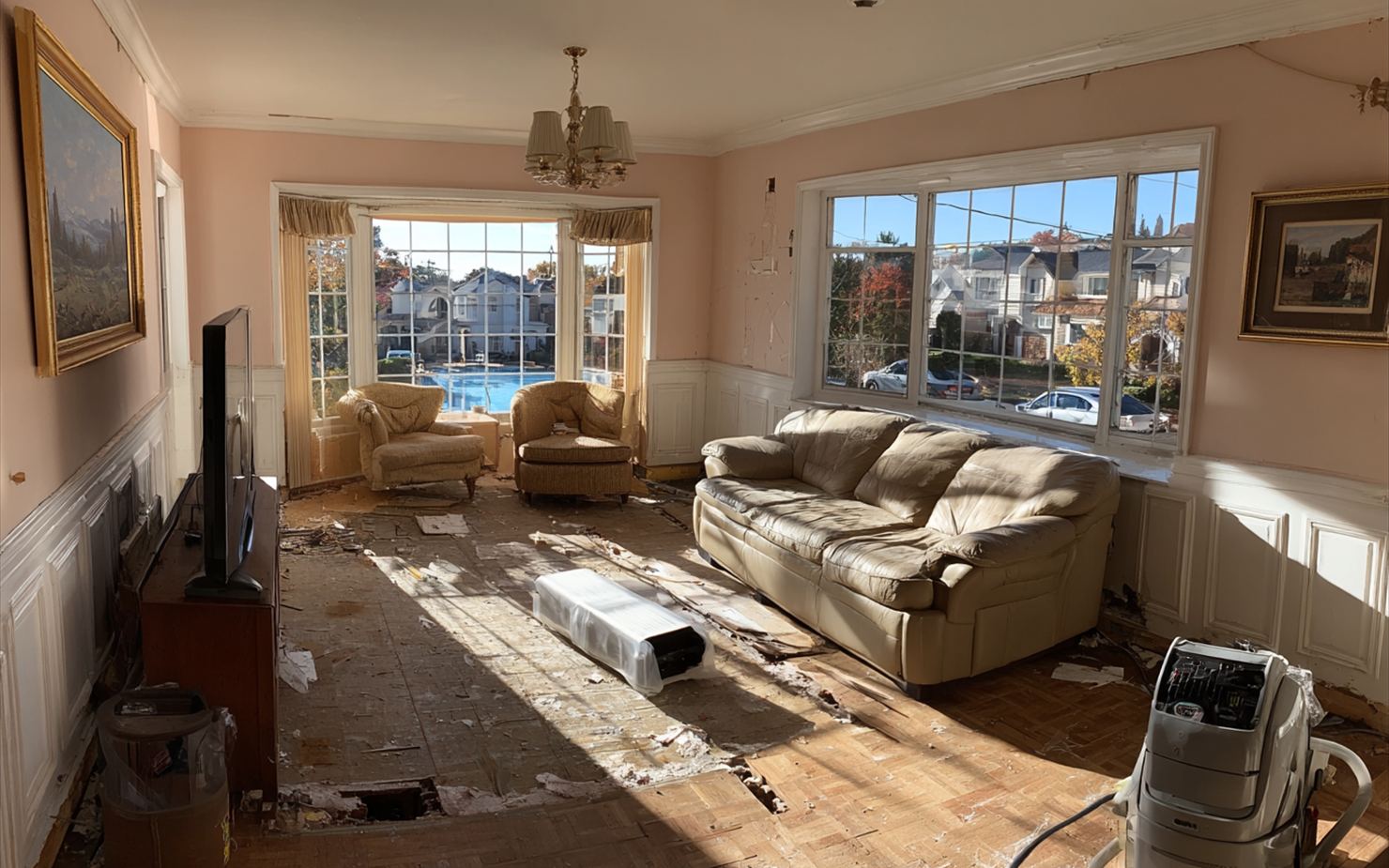
Wood Rot and Soft Framing After a Slow Leak
What months of small drips do to wood in a warm, damp climate.
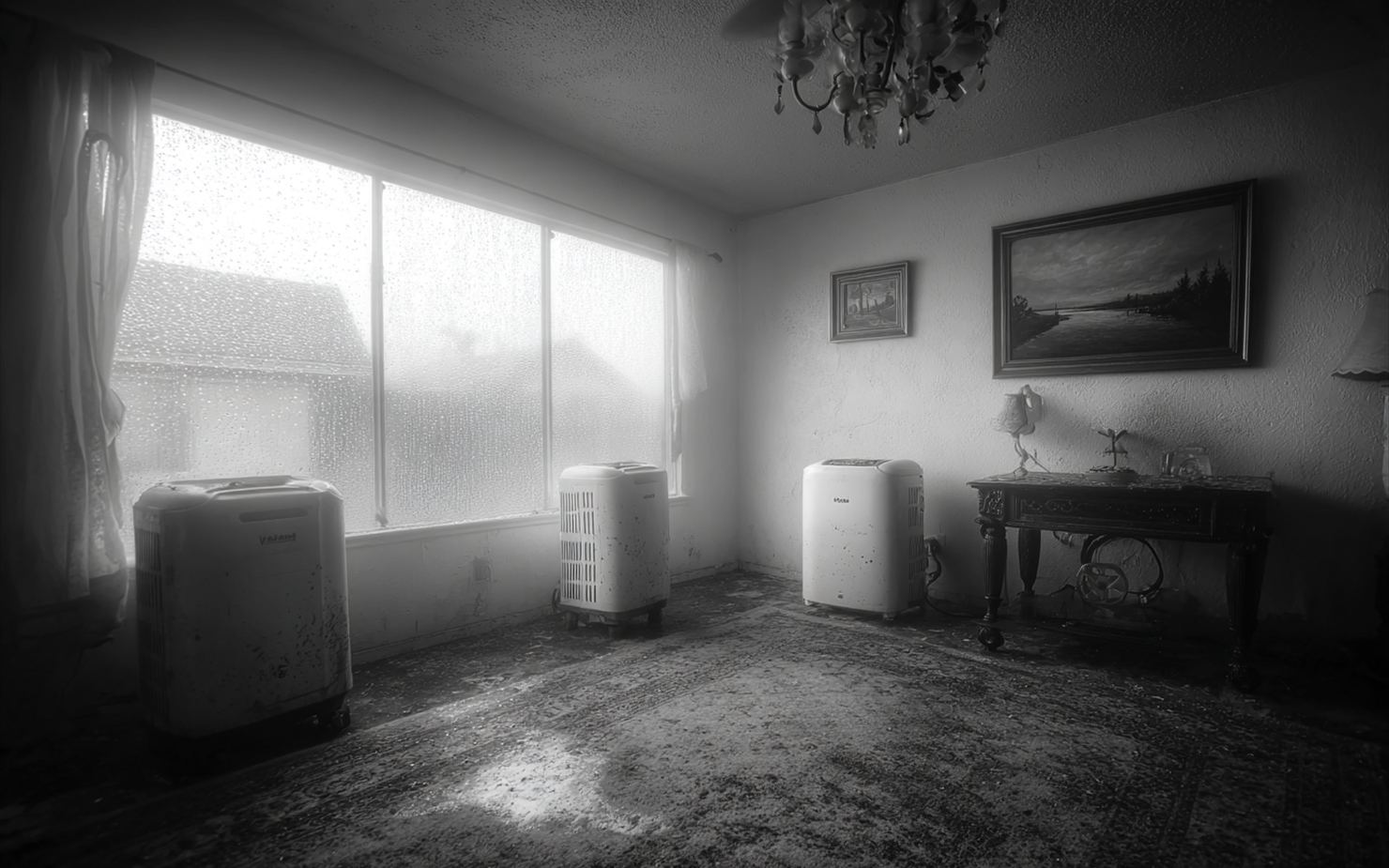
Drying a House in Georgia Humidity
Why it takes longer here, and what the equipment is doing.