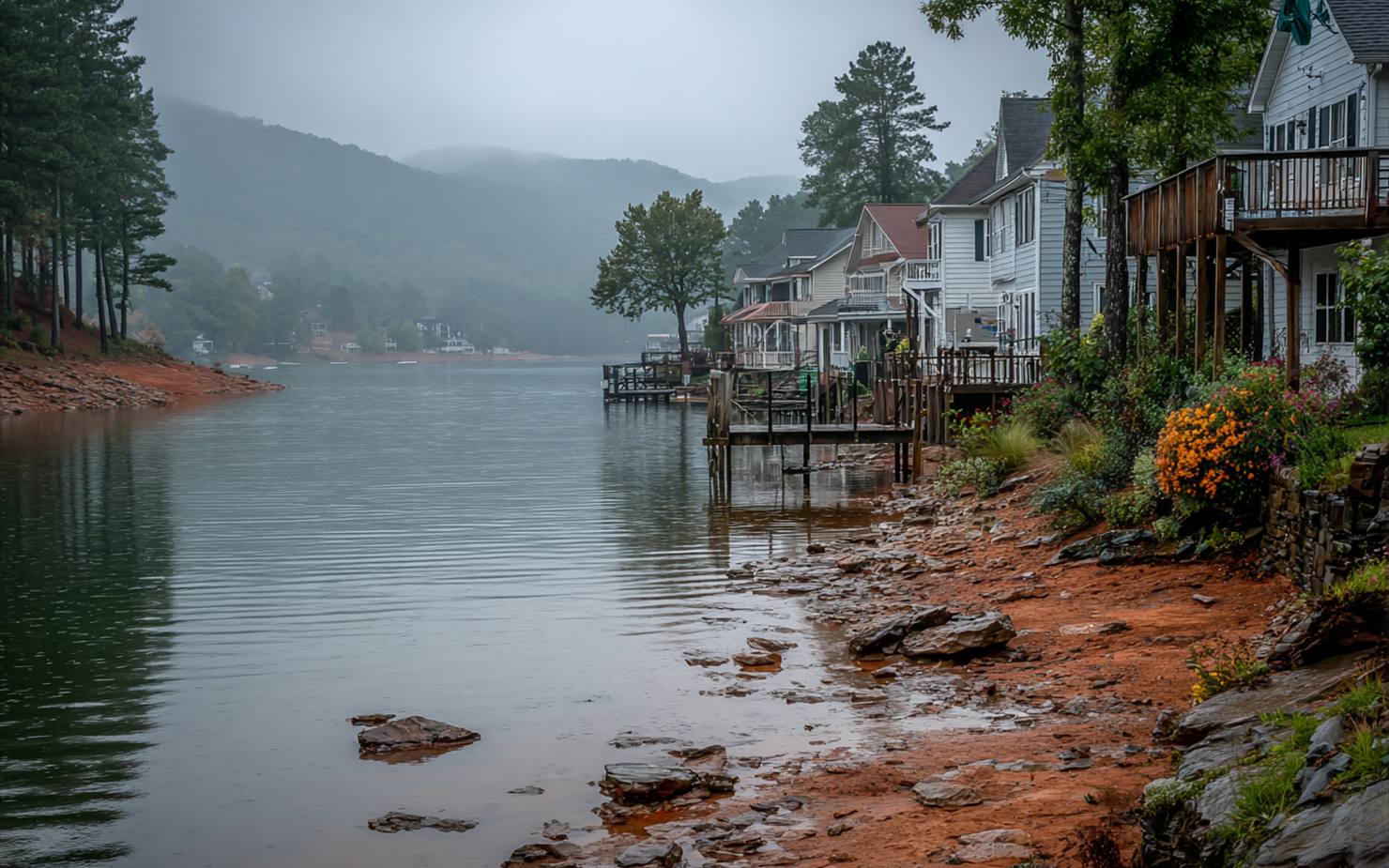
Lake homes in north Cobb and south Cherokee face the same leaks as any house, plus a few of their own. Lake Allatoona, the Army Corps of Engineers reservoir on the Etowah River, sits about 30 miles from Atlanta and draws millions of visitors a year. Lake Acworth sits beside it at the edge of downtown Acworth. Houses along both are built on lots that slope toward the water, often with lower levels facing the lake and the uphill side buried in the ground.
What Lake Lots Have in Common
| Feature | Water risk |
|---|---|
| Lots sloping toward the water | Runoff from the street side runs toward the house |
| Lower levels facing the lake | The buried uphill wall takes ground water and runoff |
| Crawlspaces on the uphill side | Collect water after long rains |
| Docks, decks and boathouses | Exterior wood exposed to weather; plumbing to outdoor fixtures |
| Second homes | Leaks can run for days before anyone notices |
| Tall trees | Heavy gutter loads and falling limbs in storms |
The Buried Uphill Wall
On a sloped lake lot, the lower level is underground on one side and open on the other. Rain soaks into the hillside above and moves downhill through the soil until it meets that buried wall. After days of rain, water can seep through the wall or along the joint where it meets the floor. Finished lower levels with carpet and drywall take the most damage.
Houses Left Empty
Many lake homes are weekend or seasonal places. A supply line that splits while nobody's there can run for days. Some practical habits:
- Shut off the water at the main when leaving for more than a few days.
- Leave the heat on at a safe minimum in winter.
- Install a leak sensor that sends an alert, near the water heater and under sinks.
- Give a neighbor a key and show them where the main shutoff is.
- Check the house after big storms, even if you're not staying.
Lake Levels
The Corps of Engineers manages Allatoona's water level, which rises and falls through the year. Lake homes built above the shoreline usually aren't flooded by the lake itself, but low-lying boathouses, docks and shoreline structures can be affected when levels are high after heavy rain. Most water damage in lake houses comes from rain, ground water and plumbing, not the lake.
Drying a Lower Level
Restoration companies extract the water, remove wet carpet, pad and the bottom of the drywall, and dry the walls and slab. Water that seeped in from outside is treated as outside water, with more removal. In humid weather near the lake, extra dehumidifiers are usually needed. More: crawlspaces and basements.
Dry it: the lower level's walls and slab are dried and measured. Fix it: rebuild, then improve drainage on the uphill side.
Drainage on the Uphill Side
The long-term fix for a wet uphill wall is usually outside: grading that sends water around the house, gutters and downspouts carried well away, and sometimes a drain along the foundation. That's separate work from the restoration, done by whoever you choose.
Around the Lakes
Lake homes around Acworth and north toward Woodstock share these patterns. Houses near Kennesaw are close enough to the lakes for weekend trips, and many owners keep places on both.
U.S. Army Corps of Engineers: Allatoona Lake
Outdoor Kitchens, Docks and Hose Bibs
Lake homes often run water to places a regular house doesn't: an outdoor kitchen on the deck, a hose bib at the dock, a utility sink in a boathouse. Those lines sit outside the heated house and can freeze in a hard cold snap, then leak when they thaw, sometimes into the lower level. Draining them before winter, or shutting them off at an inside valve, prevents most of those spring surprises.
Wells, Septic and Long Supply Pipes
Some older lake properties around Allatoona still rely on private wells or long supply lines from the road. A pressure tank in a basement or crawlspace, or a line running down the slope to the house, can leak for a while before anyone notices low pressure or a wet spot. Knowing where the main shutoff and the pump breaker are matters even more at a house you don't visit every day.
Checking After a Storm
After heavy rain, walk the lower level, open the crawlspace door, and look at the ceilings under any upstairs baths. Lake houses have more places for water to hide than a typical house, and catching it in the first day makes the drying far simpler.
Questions
Will the lake flood my house?
Most lake homes are built well above the water. The usual causes of water damage are rain, ground water and plumbing.
Why does my lower level get wet only after long rains?
Ground water from the hillside above builds up against the buried wall. It's a drainage issue as well as a drying one.
How do I protect a lake house I'm not living in?
Shut off the water when you leave, keep the heat on in winter, and use a leak sensor that alerts your phone.
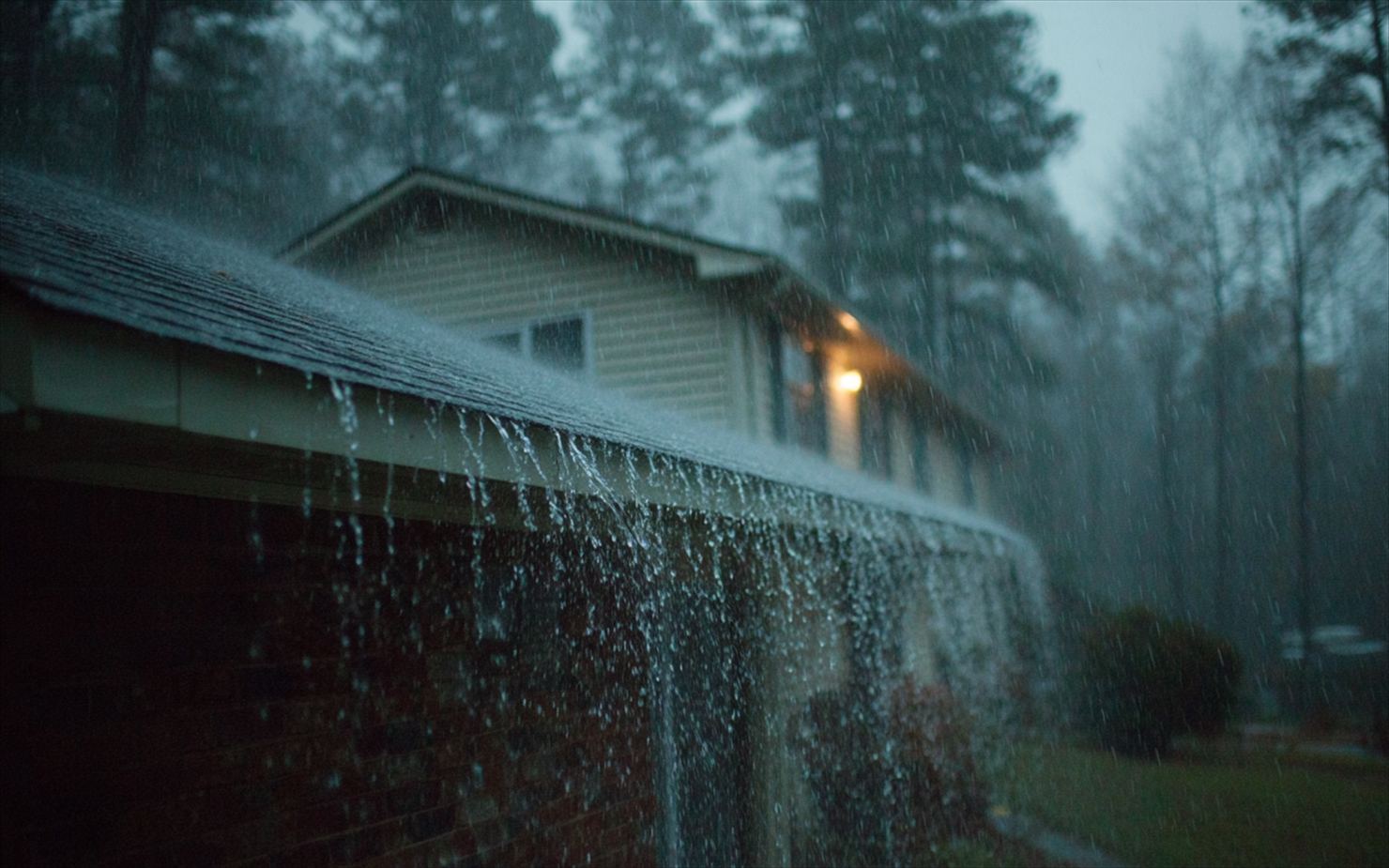
Tropical-Storm Rain Over Cobb County
Days of rain from the remnants of a hurricane.
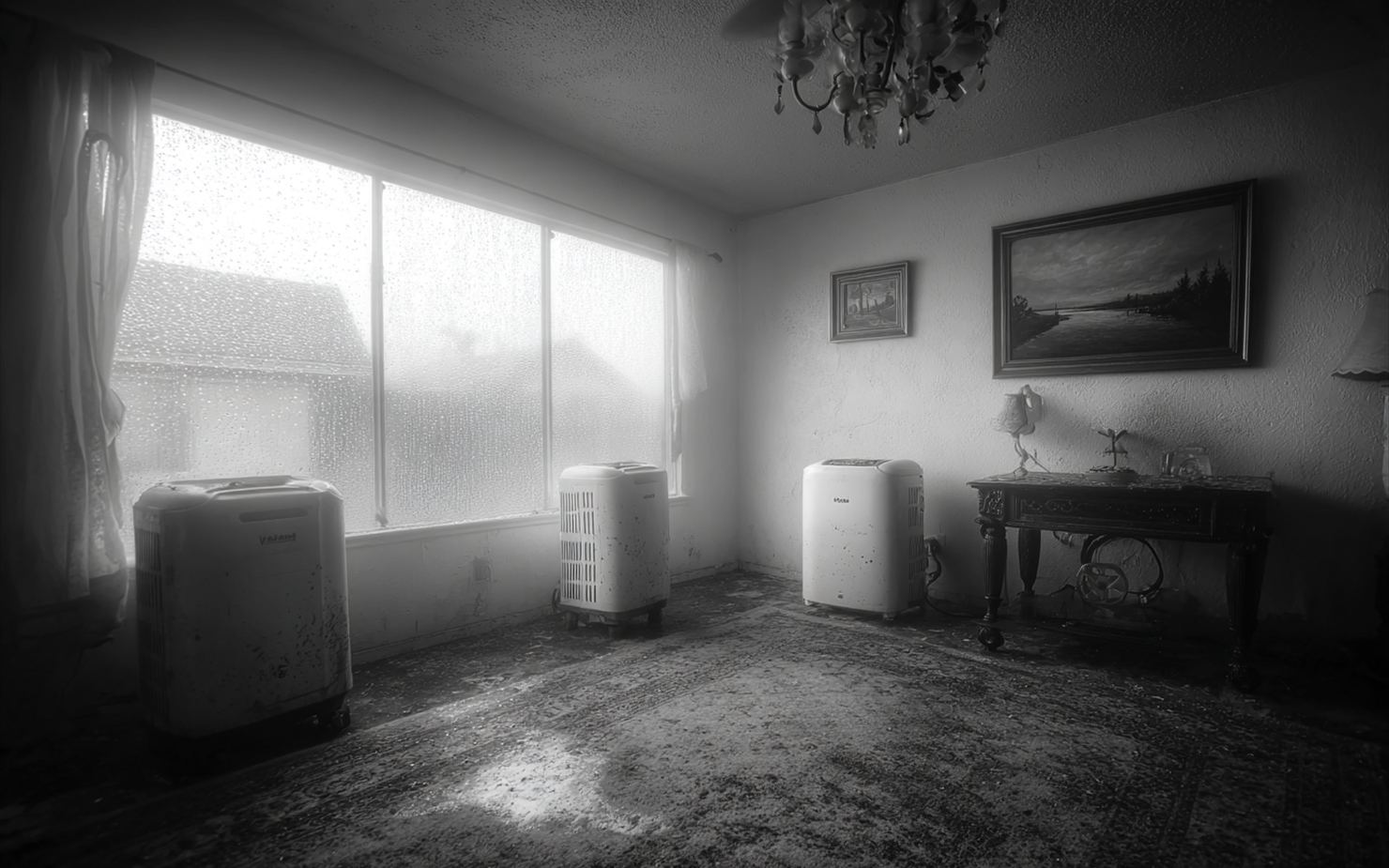
Drying a House in Georgia Humidity
Why it takes longer here, and what the equipment is doing.