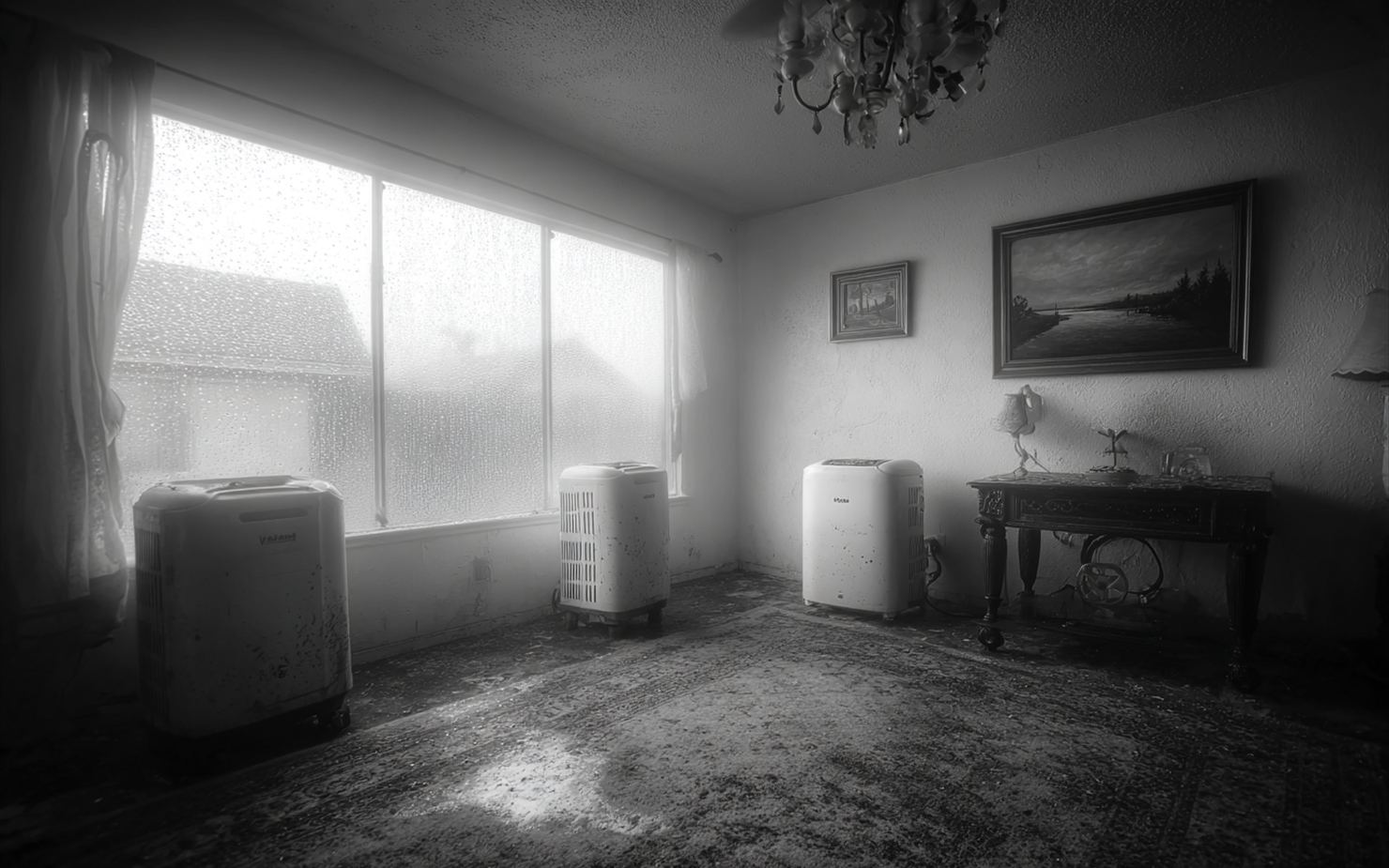
Drying a wet house is a contest between the water in the materials and the water already in the air. In a dry climate, the air soaks up moisture eagerly and wet drywall dries fast. In Marietta, the air is often warm and full of moisture from late spring into fall, so it has little room to take more. That's why restoration companies here run more equipment, keep houses closed, and plan for drying to take a little longer.
What Humidity Changes
| In a dry climate | In Georgia humidity |
|---|---|
| Open windows help | Open windows usually bring in more moisture |
| A few dehumidifiers can keep up | More dehumidifiers are needed to pull water from the air |
| Crawlspaces dry with airflow | Crawlspaces need their own dehumidifier and often closed vents |
| Drying often finishes in a few days | Several days or more is common, longer under the house |
What the Equipment Does
- Air movers blow fast air across wet surfaces, pulling moisture out of drywall, wood and carpet into the air.
- Dehumidifiers take that moisture out of the air and pump it away, so the air can pull more from the materials.
- The air conditioning helps by cooling and drying the air in the house.
- Plastic containment walls off the wet area so the equipment isn't trying to dry the whole house.
The two kinds of machines work together. Air movers without enough dehumidifiers just make the room more humid.
The Numbers That Say "Finished"
Not by touch. A surface can feel dry while the wood behind it is still wet. Each visit, the company records:
- moisture readings at the same marked spots on wet drywall, studs, subfloor and flooring
- readings from the same materials in a room that didn't get wet
- temperature and humidity inside the drying area and outside
Drying is finished when the wet spots read the same as the dry ones. Ask for a copy of the log; it matters for insurance and for any future sale. More on readings: water removal and mitigation.
Dry it: finished means the readings match, not that the room feels dry. Fix it: repairs start after that, never before.
What You Can Do
- Leave windows and outside doors shut unless told to open them.
- Leave the air conditioning on and the thermostat where they ask.
- Leave every machine where it was set, and ask before turning one off.
- Keep doors to the drying area open or closed as directed.
- Expect noise and a warm room where the equipment runs.
Why Repairs Have to Wait
Closing up a wall or laying new flooring over framing that's still damp traps moisture inside. In warm, humid conditions, that trapped moisture keeps the wood wet and the problem comes back, sometimes as a stain, sometimes as a soft floor months later. Waiting a few more days for the readings to finish is cheaper than redoing a repair.
Around Cobb
The humidity challenge is the same everywhere in the county, from older homes near Northwest Marietta to lake houses in Acworth. It's hardest in crawlspaces, which are common in Powder Springs and across south Cobb.
Winter Is Different
Cold weather changes the picture. Winter air in north Georgia holds less moisture, and a heated house is drier inside, so drying in December or January can go faster than in July. The approach is the same, though: keep the house closed, run the right mix of equipment, and measure. A hard freeze adds its own source of water, from pipes that split in garages, attics and outside walls, so winter calls can be as urgent as summer ones.
A Typical Drying Week
On the first day, the crew extracts water, removes what can't be saved and sets equipment. Each visit after, it takes readings at the marked spots, adjusts or moves equipment, and empties or checks the dehumidifiers. As areas dry, equipment comes out of them. When every marked spot matches its dry reference, the last machines leave and the drying log is closed. In a humid July that might take a week; in a dry January, less.
Signs the Drying Isn't Done
A ceiling patch that bubbles weeks after painting, a hardwood floor that keeps cupping, or a damp smell that returns on humid days usually means something was closed up before it was dry. If you see any of these after a repair, ask the company to take new readings before more work is done.
Questions
Why can't I just open the windows?
On humid days, outside air carries more moisture into the house. Restoration companies usually keep the house closed and use dehumidifiers.
How long does drying usually take here?
Often three to five days for a clean leak in living space; longer in humid weather, with hardwood, or under the house.
Will my power bill go up?
Yes, while the equipment runs. Keep a note of the dates; some insurance policies consider it.
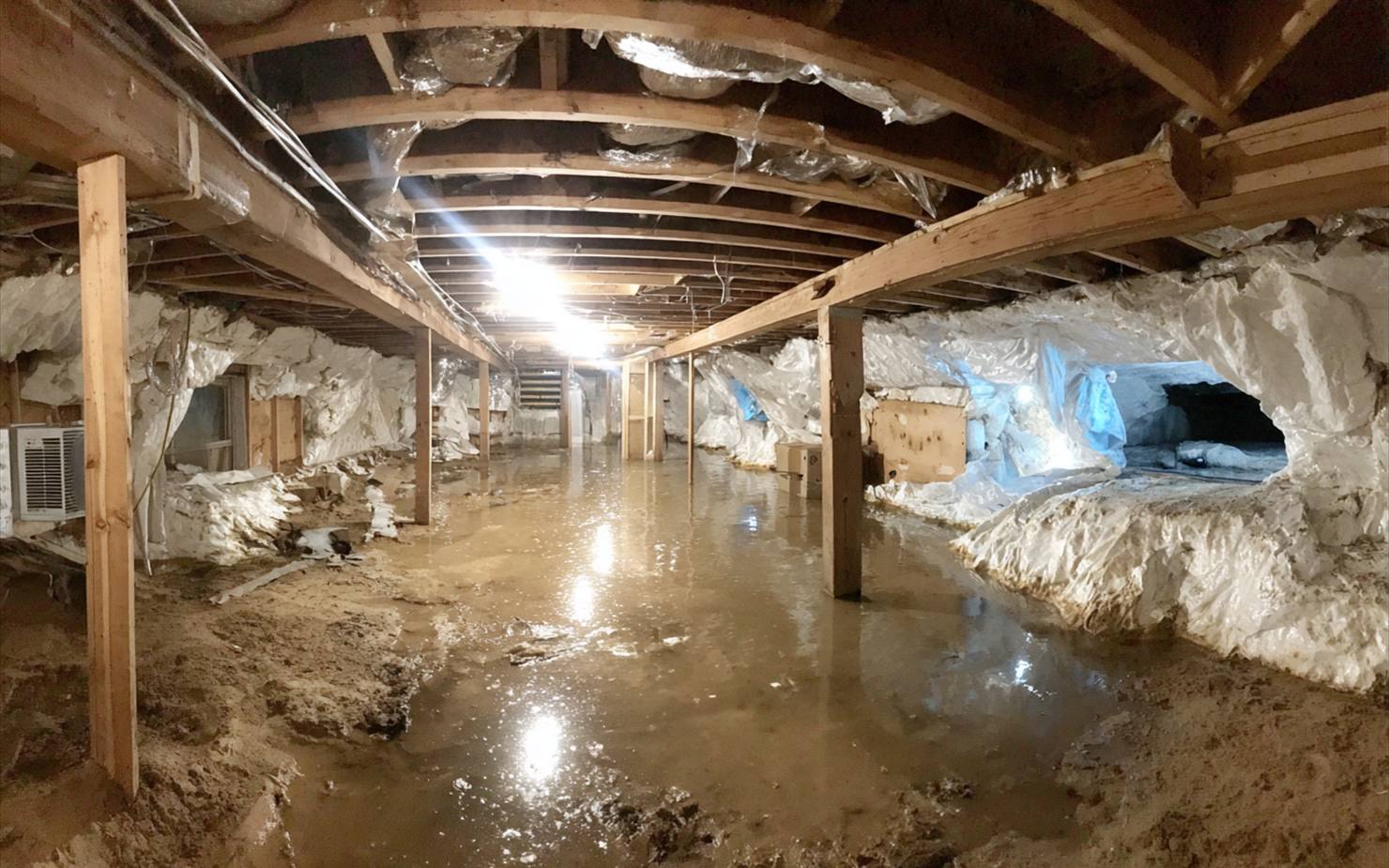
Crawlspaces in Georgia Humidity
Standing water, vapor barriers and sagging insulation.
Lake Allatoona and Lake Acworth Homes
Lake lots, lower levels and houses that sit empty.