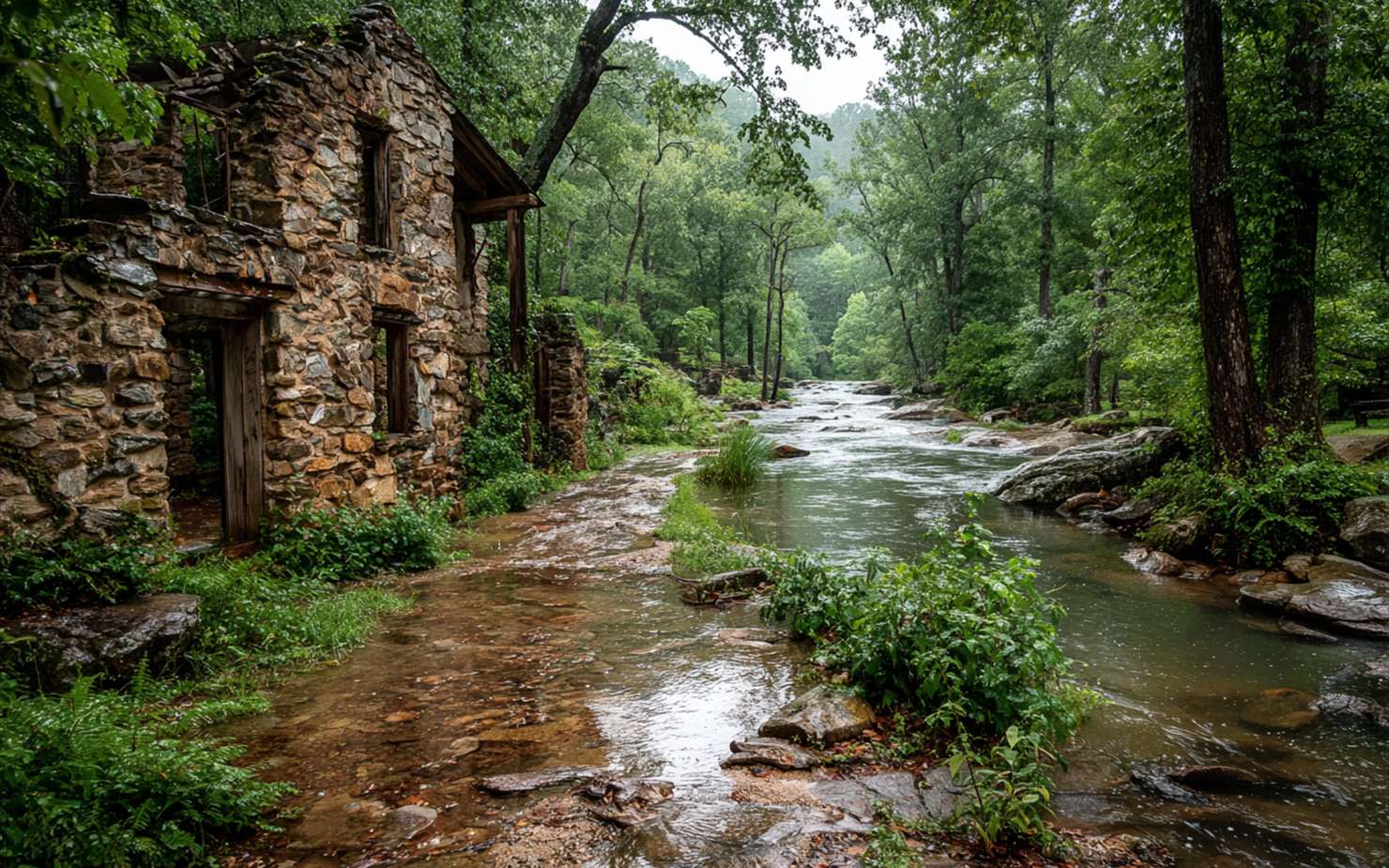
Cobb County's creeks are small most days and fast-rising in a downpour. Sope Creek winds through East Cobb to the Chattahoochee; Rottenwood Creek runs through the Smyrna and Cumberland area to the same river; dozens of smaller branches drain the subdivisions in between. When heavy rain falls on hills covered with roofs, driveways and streets, that water reaches the creeks quickly, and the creeks rise in hours.
September 2009
The floods of September 2009 are the benchmark for north Georgia. Days of heavy rain fell on already wet ground across metro Atlanta, and creeks and rivers rose to levels not seen in decades. The National Weather Service counted some 20,000 homes, businesses and other buildings with major damage across Georgia, and 17 counties received federal disaster declarations. USGS gauge data show Sope Creek near Marietta at 18.29 feet and Rottenwood Creek near Smyrna at 11.74 feet on September 21, 2009.
Flooding didn't stop there. The National Weather Service issued a flood warning for Sope Creek near Marietta again in September 2024, and flash floods since have left some Cobb homeowners with large repair bills.
How Creek Water Reaches Houses
| Path | What usually happens |
|---|---|
| Over the yard | The creek leaves its banks and crosses low lawns toward the house |
| Into the crawlspace | Water enters through vents and foundation gaps, or rises from saturated ground |
| Through a walkout basement | A lower level facing the creek takes water at the door |
| Up through drains | Storm water backs up in overwhelmed lines |
| Into the garage | Water flows down a driveway that slopes toward the street or the creek |
When the Water Is Rising
- Get to higher ground if the water is still coming up. Never walk or drive through moving water.
- Keep out of a flooding basement or crawlspace, especially with power on.
- Move valuables and important papers upstairs if it's safe to.
- Photograph and video the water outside and inside once it's safe.
- When the water drops, call to get the cleanup and drying started.
Cleaning Up After Creek Water
Creek water isn't clean. It carries soil, debris and whatever it washed over on its way. Restoration companies treat it as outside water:
- carpet and pad that touched it are removed
- the drywall is cut a foot or so above the high-water mark, and soaked insulation is pulled
- mud is removed and hard surfaces are cleaned before drying
- the crew works in boots, gloves and masks, and the family keeps kids and pets clear
- the crawlspace often needs a new vapor barrier and insulation
More on the drying side: water removal and mitigation.
Dry it: after the cleanup, measured drying of the structure. Fix it: the rebuild, once the readings are dry.
Insurance and Flood
Standard homeowner policies usually exclude flood from rising surface water. Flood coverage typically comes from a separate flood policy, such as one through the National Flood Insurance Program. Check the flood map for your lot and talk to your agent before the next big storm.
Living Near a Cobb Creek
- Sign up for weather alerts from the National Weather Service office in Peachtree City.
- Check the flood maps from the City of Marietta or FEMA for your lot.
- Keep valuables off the lowest floor in a house that has flooded before.
- Keep gutters, downspouts and yard drains clear so your own runoff isn't adding to the problem.
Around Cobb
Homes in Sope Creek and Chattahoochee Plantation sit along the creek and the river. Smyrna borders Rottenwood Creek, and Austell sits on Sweetwater Creek, another hard-hit stream in 2009.
NWS Peachtree City: the 2009 floods NOAA gauge: Sope Creek near Marietta
Why the Creeks Rise So Fast
Cobb's creeks drain hills that are now mostly roofs, driveways, parking lots and streets. Rain that once soaked into woods and fields now runs off hard surfaces into gutters, storm drains and pipes, and reaches the creeks within minutes. A thunderstorm that drops two or three inches in an afternoon can take a creek from a trickle to over its banks before the rain stops, and drop it again by the next morning. That's why the damage often comes as a surprise to people who rarely see the creek running high.
After the Water Goes Down
Once the creek drops back into its banks, the mud left behind holds moisture and keeps the house wet. Restoration companies shovel and wash it out before drying, check the crawlspace and the lowest floor, and photograph the high-water line for insurance. Outside, debris left in the yard can block drains for the next storm, so clearing it soon helps.
Questions
Is creek water the same as a burst pipe for cleanup?
No. Creek water is outside water, so more material is removed and surfaces are cleaned before drying.
Does homeowner insurance cover creek flooding?
Usually not. Flood from rising water typically needs a separate flood policy.
How do I know if my house is in a floodplain?
Check the City of Marietta floodplain resources or FEMA's flood map service with your address.
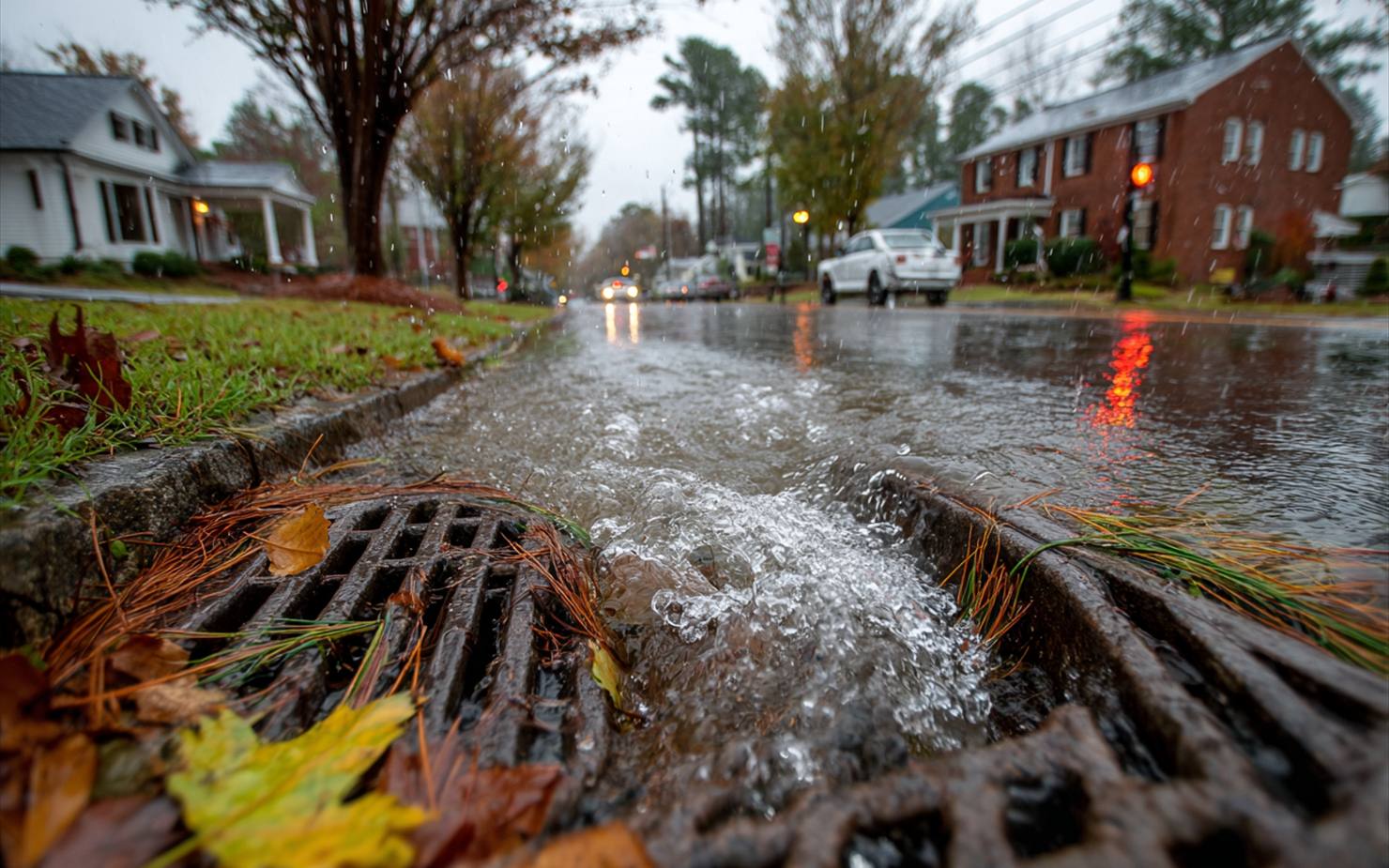
Storm Drains and Clogged Culverts in Cobb
Pine straw, leaves and the water that backs up.
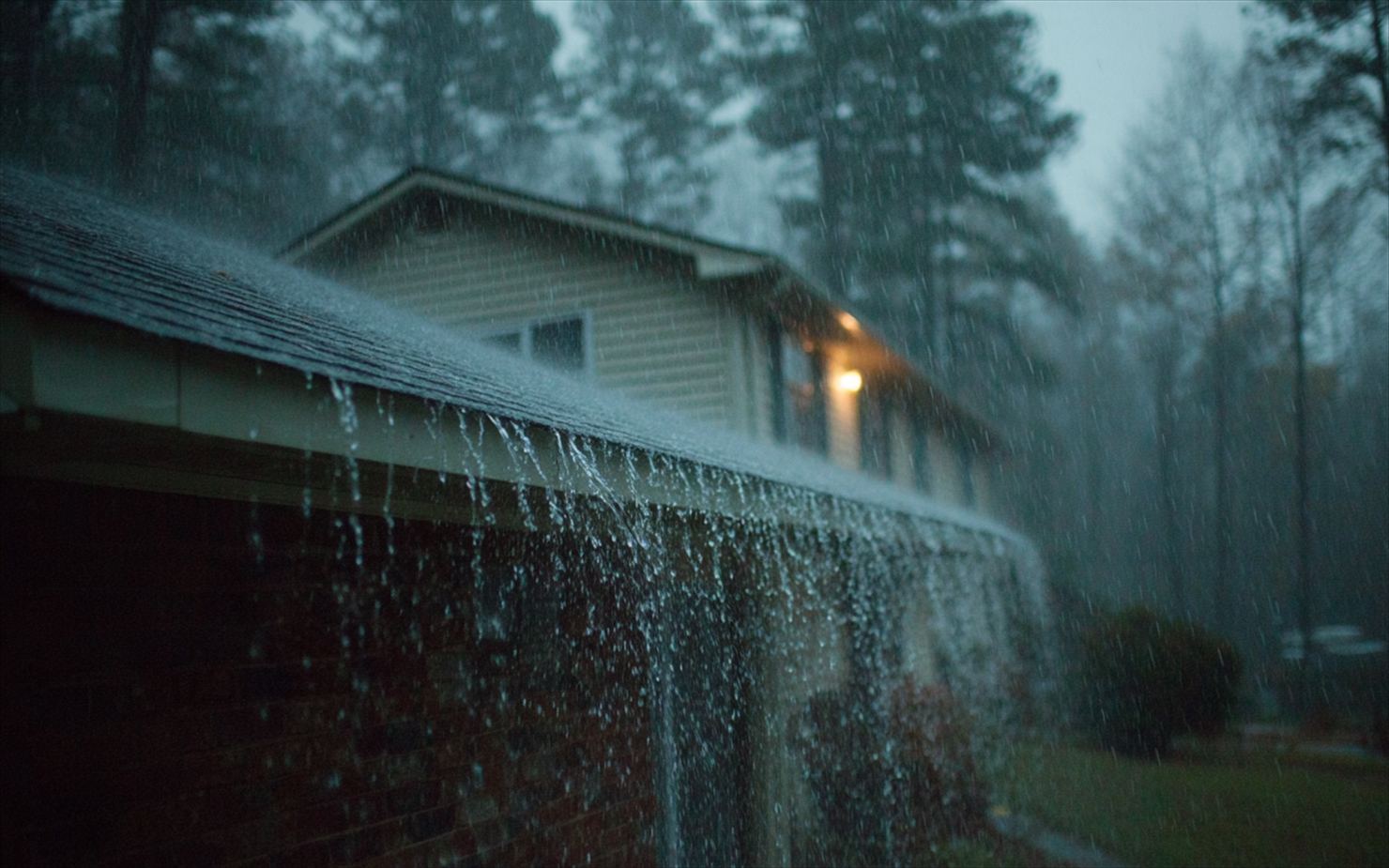
Tropical-Storm Rain Over Cobb County
Days of rain from the remnants of a hurricane.