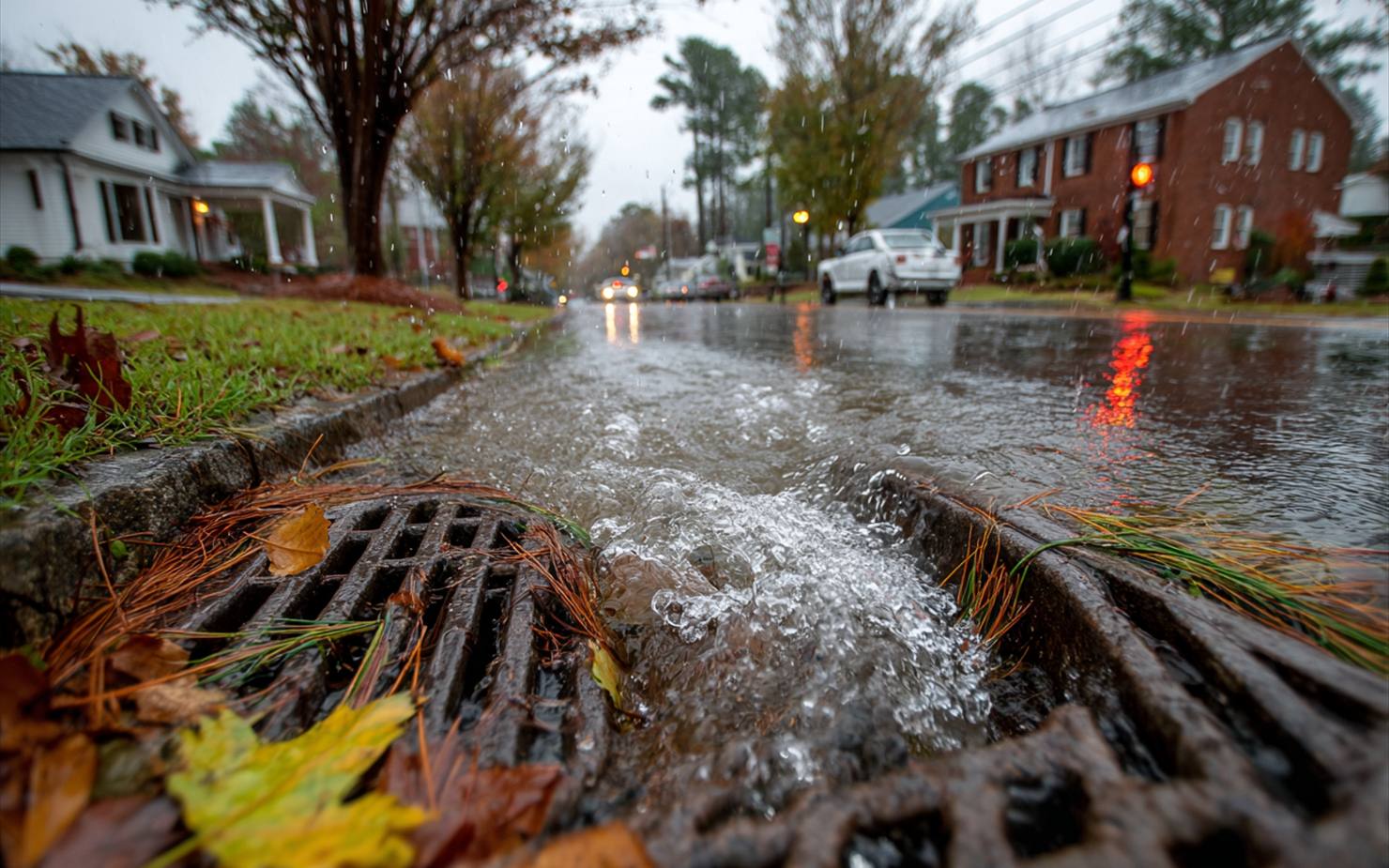
Most street flooding in Cobb neighborhoods isn't the creek; it's the drain. A storm drain inlet at the curb, a culvert under a driveway, or a pipe that carries water to the nearest creek can only take so much. When leaves, pine straw, mulch or trash block it, the water that should go down goes sideways, toward the lowest yards, garages and crawlspaces on the street. Local news has reported Marietta homeowners flooded by a clogged storm drain.
How Neighborhood Drainage Works
Rain falls on roofs, driveways and streets, runs down gutters and curbs, and drops into inlets at the low points. From there, pipes carry it to a creek, a ditch or a detention pond. Culverts carry water under driveways and roads. Every piece of that path has to stay open for the system to work.
What Clogs It
| Culprit | When |
|---|---|
| Leaves and pine straw | Fall, and after windy storms |
| Grass clippings and mulch | Spring and summer yard work |
| Sediment from construction | Near new building or renovation |
| Trash and debris | Any time; worst after storms |
| Roots and broken pipes | Older systems |
Where the Water Goes
- Down the driveway into a garage that sits lower than the street
- Across the yard toward a basement door or crawlspace vents
- Along the curb to the end of a cul-de-sac or a dip in the road
- Into window wells or low doors on the downhill side
Street water is outside water. It has crossed pavement and yards, so restoration companies treat it as dirty: carpet and pad that touched it are removed, drywall is cut above the water line, and surfaces are cleaned before drying. More: crawlspaces and basements.
Dry it: clean, then dry, the garage, the crawlspace or the rooms it reached. Fix it: rebuild, then deal with whatever let the water in.
During a Storm
- Stay out of flooded streets. Water over a storm drain can hide an open inlet.
- Don't try to clear a drain during a storm. The pull of the water can be strong.
- Move cars and belongings out of a garage that's taking water, if it's safe.
- Photograph the street and your property as it happens.
After the Storm
- Clear what you safely can from the grate in front of your house: leaves, straw, trash.
- Report blocked inlets, culverts and broken pipes to the city or county. Public drains are maintained by the local government.
- Note the date and the depth of the water for your records and any claim.
Your Own Drainage
Gutters, downspouts, yard drains and the grading around your house are your responsibility. Downspouts that empty right at the foundation, or a yard that slopes toward the house, add to the problem during a storm. Fixing grading and drainage is separate from the restoration and done by whoever you choose.
Around Cobb
Neighborhood inlets along Sandy Plains and across Fair Oaks fill with leaves each fall. Hillside streets in Vinings send runoff quickly to the bottom. Low ground near Sope Creek takes water from both the drains and the creek.
City of Marietta floodplain management
Detention Ponds and Neighborhood Ditches
Many Cobb subdivisions have a detention pond or a drainage ditch that holds storm water and releases it slowly. Depending on how the neighborhood was set up, these may be maintained by an HOA or by the county. When a pond's outlet clogs or a ditch fills with sediment, water backs up into nearby yards. If you notice standing water that doesn't drain days after a storm, report it to the HOA or the county.
Fall Is the Season to Watch
Cobb's tall pines and hardwoods drop most of their needles and leaves from October into December, right when heavy fall storms and the remnants of late-season tropical systems can arrive. A drain that handled summer storms fine can be half-buried in pine straw by November. A few minutes with a rake at the curb in front of your house before a forecast storm does more good than you'd expect.
Neighbors and Shared Runoff
On sloped streets, one yard's runoff becomes the next yard's problem. If water started reaching your house after a neighbor regraded, added a patio or installed new downspouts, note the date and talk with them first. The county can explain what's allowed if a conversation doesn't solve it.
Questions
Who's responsible for the storm drain in front of my house?
Public storm drains are maintained by the city or county. Report blockages to them. Yard drains and downspouts on your lot are yours.
Is street flood water covered by homeowner insurance?
Often not, if it's considered surface flooding. Ask your agent how your policy treats it.
Can I clean the storm drain myself?
Clearing loose leaves from the top of a grate is fine when it's safe. Leave anything inside the drain to the city or county.
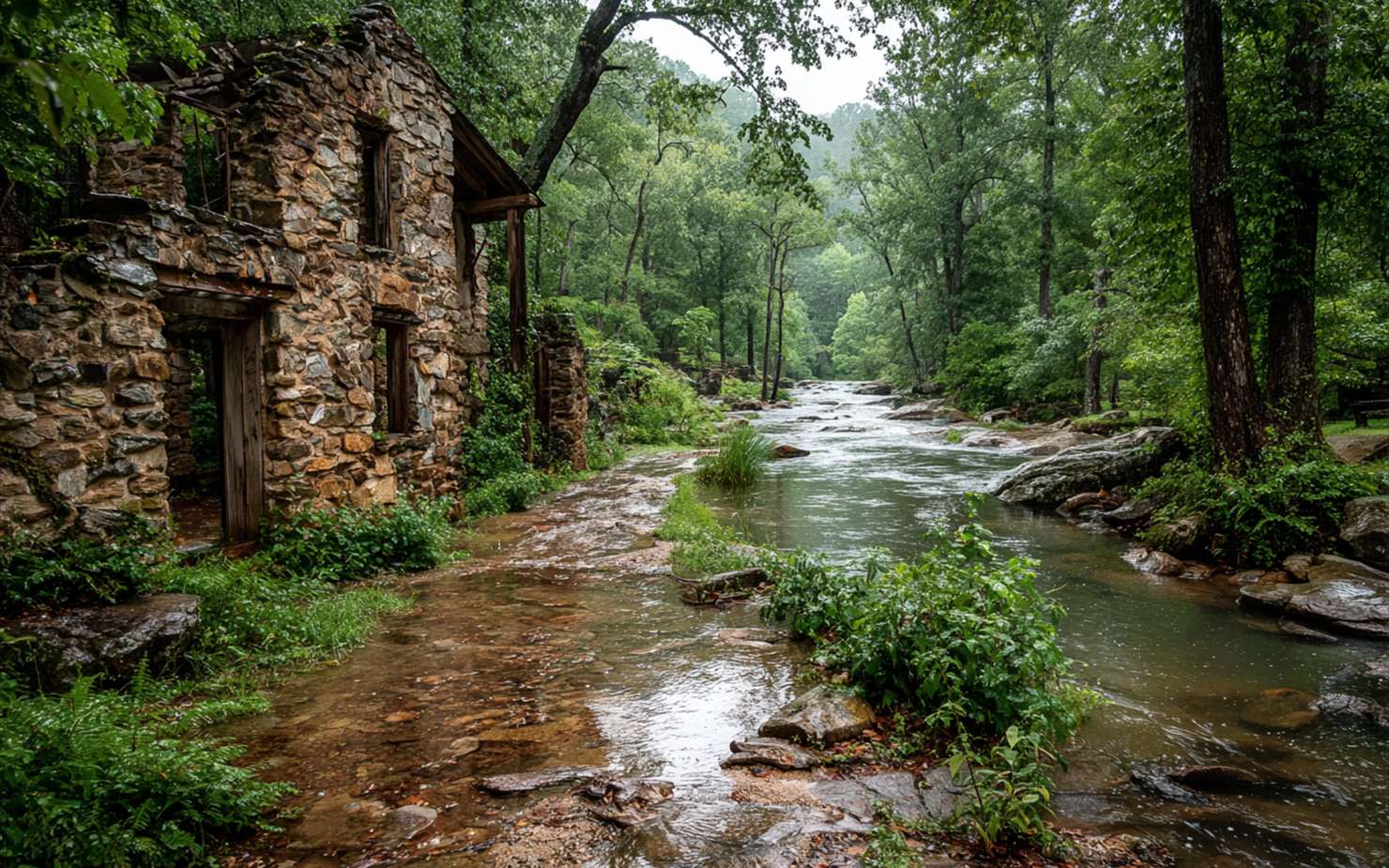
Sope Creek, Rottenwood Creek and Cobb Flash Floods
How fast Cobb's creeks rise, and what that means for low yards.
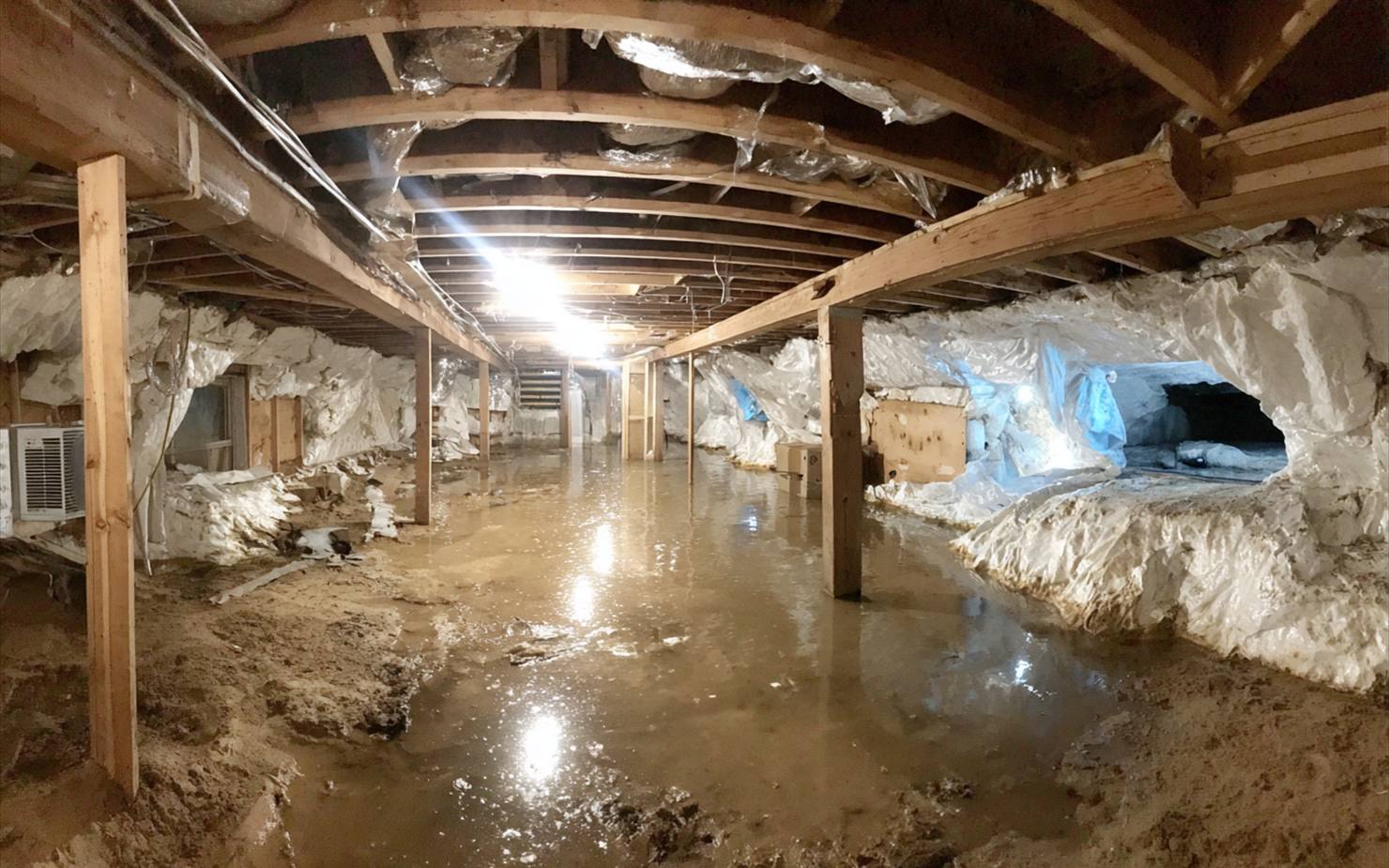
Crawlspaces in Georgia Humidity
Standing water, vapor barriers and sagging insulation.